



This report provides a comprehensive, multi-dimensional analysis of the strategic value of incorporating Smoothies & Soups: Delicious Vegan Combos for Every Season into the diet. Using the lenses of nutritional science, ethical advocacy, environmental impact, practical application, and cultural observation, we explore how these versatile meals optimize nutrient intake, simplify cooking, and promote seasonal alignment.
Key findings confirm that soups and smoothies are ideal vehicles for delivering concentrated nutrition, reducing food waste, aligning consumption with ethical and sustainable practices, and providing comforting or refreshing options year-round. This analysis synthesizes these perspectives to highlight their critical role in achieving consistent, high-quality plant-based nutrition.
Nutritional Crossroads
The strategic use of smoothies and soups places the eater at a crucial “Nutritional Crossroads.” These formats are exceptional because they allow for the blending and concentration of otherwise bulky or difficult-to-consume nutrient-dense ingredients (e.g., kale, spinach, flax seeds, dark beans) into easily digestible forms.
The key nutritional function of both is maximizing nutrient absorption and fiber intake. Smoothies, used cold, are perfect for fruits, leafy greens, and supplements, while soups, served hot, are ideal for legumes, root vegetables, and spices. Mastering these two forms ensures that the body receives a continuous supply of vitamins, minerals, and antioxidants, regardless of the season or daily schedule.
LENS 1: Nutritional Analysis
The Nutritionist’s View: Maximizing Nutrient Density and Absorption
For the nutritionist, both smoothies and soups are powerful tools for managing macro and micronutrient intake, especially for increasing fiber and vegetable consumption without the volume fatigue often associated with salads.
“Smoothies and soups are the ultimate vessels for nutrient stacking,” asserts Dr. Sarah Chen, a Registered Dietitian specializing in whole foods nutrition. “A smoothie allows you to consume a full day’s serving of greens, flax seeds, and various fruits in one easily digested format.
Soups, conversely, are excellent because cooking often makes minerals like calcium and iron in greens and beans more bioavailable, and the liquid base aids in hydration. When transitioning to a vegan diet, using these formats is the best way to ensure high and diverse intake of essential phytochemicals.”
Nutritional Deep Dive: Fiber and the Liquid Matrix
Both formats, unlike juices or broths, retain the whole-food fiber. This fiber is crucial for regulating blood sugar and promoting gut health. The liquid matrix of a blended smoothie or soup helps slow the stomach’s emptying rate, leading to increased satiety and better nutrient assimilation compared to eating the components raw and separate.
Seasonal Combos for Max Nutrition:
- Summer Smoothie (Cold): Spinach, mango, banana, chia seeds (Focus: Vitamin C, Carotenoids, Omega-3s)
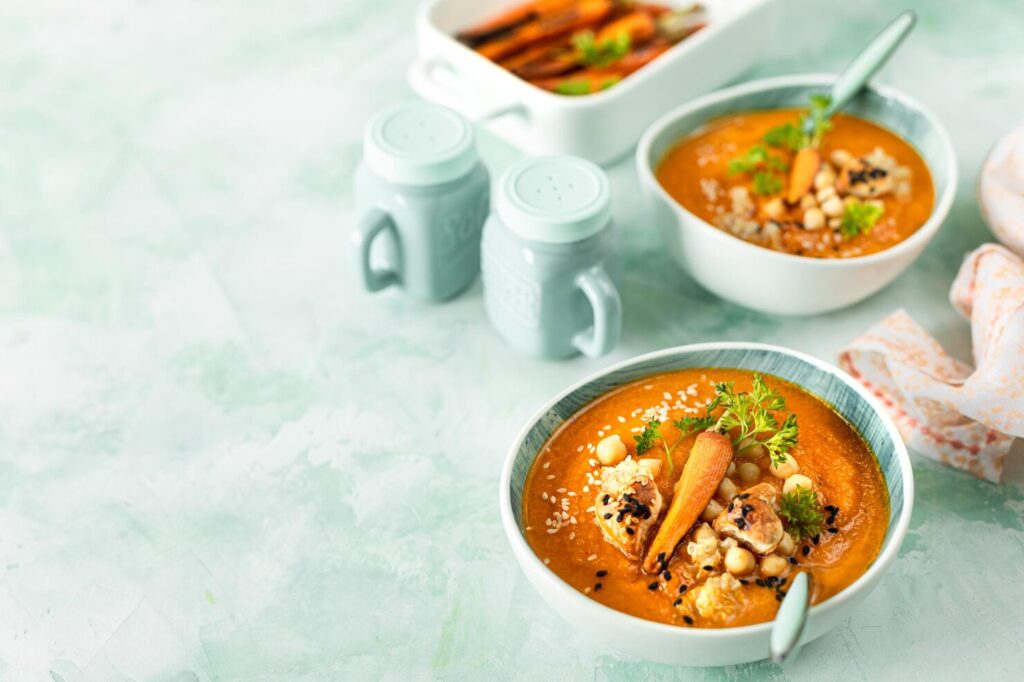
- Winter Soup (Hot): Butternut squash, red lentils, ginger, kale (Focus: Beta-Carotene, Iron, Protein, Anti-inflammatories)
LENS 2: Ethical Framework
The Ethical Advocate’s Stance: Conscious Consumption, Waste Reduction
The ethical advocate views the versatility of soups and smoothies as a key strategy for reducing food waste—a major ethical issue—and ensuring that consumption aligns with sustainable, compassionate values.
“Food waste is a moral failure of the modern food system,” explains Alex Hsu, an ethical advocate. “Soups and smoothies are the ultimate tools for zero-waste cooking. Leftover vegetable scraps, slightly bruised fruits, wilting greens, or cooked grains that might otherwise be tossed are perfect ingredients for a nutritious blend or a simmering pot. This commitment to using every edible part of the ingredient reinforces the deep-seated ethical value of resourcefulness.”
Critical Reassessment: Sourcing High-Impact Ingredients
The ethical plan involves critically assessing global ingredients common in these formats (e.g., bananas, avocados, coconut milk). Choosing Fair Trade certified items and supporting brands committed to sustainable labor practices is essential, ensuring the ethical integrity of the final product.
LENS 3: Environmental Impact
The Environmental Scientist’s Analysis: Seasonal Alignment and Reduced Waste
The environmental scientist strongly advocates for the flexible use of soups and smoothies because they facilitate seasonal alignment and food waste mitigation, both major environmental wins.
“By shifting between soups in winter and smoothies in summer, the consumer naturally supports whatever ingredients are seasonally and locally abundant, significantly reducing food miles,” states Dr. Camila Velez, an environmental impact specialist. “
More importantly, blending and boiling effectively utilizes food that would otherwise be composted or landfilled. Reducing food waste is one of the most powerful individual actions for climate mitigation, as it cuts down on methane emissions from decomposition.”
Market Transformation Maps: Utilizing Imperfect Produce
The high demand for ingredients in these formats creates a market for “ugly” or “imperfect” produce that is unsuitable for display but perfectly fine for blending. This helps reduce unnecessary farm-level waste and supports a more efficient, circular food system.
LENS 4: Practical Application
The Everyday Practitioner’s Experience: Batch-Cooking and Speed
For the everyday practitioner, smoothies and soups solve the biggest practical challenges: time and consistency. They are uniquely suited for batch preparation and speed.
“Soups are the kings of Sunday batch-cooking; they improve with age, freeze beautifully, and provide multiple ready-made meals,” advises Lisa Chen, a vegan lifestyle coach. “Smoothies are the queens of 5-minute, zero-cook meals—just blend and go. A simple, repeatable recipe for both hot and cold is the key to maintaining a high-quality vegan diet, especially when time is short.”
Daily Impact: The 5-Minute Solution
- Smoothie Prep: Pre-portioning frozen fruit, greens, and seeds into daily freezer bags allows for a complete, nutritious meal to be blended in less than 2 minutes.
- Soup Prep: Making a large pot of chili or squash soup provides 4-6 dinners, eliminating decision fatigue and cooking time for most of the week.
Seasonal Combos for Practicality:
- Autumn: Hearty Root Vegetable Soup (Excellent for large-batch freezing)
- Spring: Light Green Smoothie (Quick, hydrating, uses fresh early greens)
LENS 5: Cultural Significance
The Cultural Observer’s Perspective: Comfort, Nostalgia, and Modern Efficiency
Soups and smoothies tap into two deeply rooted, yet distinct, cultural categories: comfort/nostalgia (soup) and modern performance/efficiency (smoothie).
“Soup holds a powerful cultural status as the quintessential comfort food—it’s tied to healing, home, and warmth,” observes Dr. Jason Wu, a sociologist of food culture. “The smoothie, conversely, is the emblem of the modern wellness movement—quick, functional, and packed with optimized nutrition. By embracing both, the vegan diet successfully integrates both cultural needs: the need for soothing comfort in one season and high-efficiency performance in the next.”
Turning Point Analysis: The Blender Revolution
A key cultural turning point was the introduction of high-powered blenders. This technology allowed tough ingredients like kale stems, nuts, and frozen fruit to be perfectly pulverized, making the nutritious, fiber-rich “green smoothie” a mainstream cultural phenomenon and not just a niche health trend.
Voice of Experience: Feeling Prepared
“Knowing I have a delicious, nutritious soup ready in the fridge or a pre-bagged smoothie waiting in the freezer makes me feel totally prepared and calm,” shares lifestyle advocate Alex Miller. “That feeling of being nourished and prepared is a huge cultural win.”
PERSPECTIVE INTERSECTION MATRIX
- Nutrition (LENS 1) cap Practical Application (LENS 4): The goal of maximizing nutrient stacking (LENS 1) is easily achieved through the practical methods of pre-bagged smoothie kits and batch-cooked soups (LENS 4).
- Ethics (LENS 2) cap Environmental Impact (LENS 3): The ethical commitment to reducing food waste (LENS 2) is seamlessly aligned with the environmental benefit of utilizing imperfect produce and scraps in blended/boiled recipes (LENS 3).
- Cultural Significance (LENS 5) cap Environmental Impact (LENS 3): The shift between cold (smoothie) and hot (soup) recipes promotes consuming ingredients that are seasonal and local, aligning cultural preferences with environmental sustainability.
- Synthesis: Smoothies and soups provide a perfect framework for the vegan diet, offering nutritional resilience and cultural flexibility while championing ethical and environmental resourcefulness.
MISCONCEPTION ANALYSIS
| Misconception | Reality |
| “Smoothies are just fruit juice with added stuff.” | A true, healthy smoothie retains all fruit and vegetable fiber, making it a whole-food meal; juice removes the fiber entirely. |
| “Soups lose all their nutrients from boiling.” | While some nutrients (like Vitamin C) are reduced, many others (like Beta-Carotene, Iron) are made more bioavailable, and the cooking liquid retains leached nutrients. |
| “Blending destroys the fiber.” | Blending breaks down the cell walls, making the fiber easier to digest, but the fiber itself remains in the product, unlike juicing. |
| “Smoothies and soups are not filling enough to be a meal.” | By adding protein (lentils, seeds, beans) and fat (avocado, nuts) to either format, they become complete, highly satiating meal replacements. |
KEY TURNING POINTS
- The High-Powered Blender Revolution (2000s): The introduction of technology capable of pulverizing tough greens and seeds made nutrient-dense, fiber-rich smoothies accessible to all.
- The Gut Health Focus: Increased research validating the role of gut health amplified the importance of high-fiber, easily digestible meals like soups and smoothies.
- The Batch-Cooking Trend: The mainstreaming of meal prepping validated the efficiency of large-batch soup cooking for time-constrained lifestyles.
SYNTHESIS & RECOMMENDATIONS
Mastering the dual arts of smoothie and soup preparation is the most effective way to ensure a nutritious, versatile, and sustainable vegan diet year-round.
Convergent Reflections: The need for maximized nutrient intake (Nutrition) is met through methods that ensure zero food waste (Ethics/Environment). This is made seamless by simple preparation (Practical), allowing the individual to meet both their need for comfort and performance (Cultural).
Recommendations:
- Embrace the 2-Minute Prep: Use pre-bagged freezer packs for smoothies to minimize morning prep time.
- Use the Whole Plant: Use smoothie bases to incorporate tough-to-eat items like kale stems, carrot tops, and broccoli stalks (after light steaming).
- Prioritize Protein: Always add a source of protein (beans, lentils, nut butter, or protein powder) to both your smoothies and your soups to ensure satiety and stable energy.
- Date Your Soups: Label and date all batch-cooked soups before freezing to prevent freezer burn and ensure minimal food waste.
FURTHER AREAS OF EXPLORATION
- Detailed recipes for five simple, high-protein vegan soup bases for batch cooking.
- The best methods for incorporating healthy fats (avocado, seeds) into both hot and cold blends.
- The impact of blending versus chewing on nutrient absorption and satiety levels.
- A guide to using seasonal herbs and spices to customize both hot and cold recipes.