



This report provides a comprehensive, multi-dimensional analysis of the efficacy and significance of adopting Top Plant-Based Superfoods to Strengthen Your Immune System. Using the lenses of nutritional science, ethical advocacy, environmental impact, practical application, and cultural observation, we explore how strategic plant-based consumption optimizes immune function.
Key findings confirm that certain plant foods are exceptional sources of immune-critical nutrients (Vitamins C, D, Zinc), that sourcing these foods ethically impacts global communities, and that their increased consumption is driving global market and cultural shifts toward preventative health. This analysis synthesizes these perspectives to highlight the critical role of plant-based superfoods in building resilient health.
Nutritional Crossroads
The choice to prioritize plant-based superfoods for immune support places the consumer at a definitive “Nutritional Crossroads.” While a balanced diet is always the foundation of health, certain plant foods contain exceptional concentrations of immunomodulatory compounds—nutrients and phytochemicals that directly support the body’s defense system.
The goal is to move beyond general healthy eating to strategically incorporate foods rich in Vitamin C, Vitamin A, Zinc, Selenium, and Quercetin. This selective focus ensures that the immune system receives concentrated, bioavailable components necessary for the creation of white blood cells, the protection of cellular membranes, and the regulation of inflammatory responses, thereby establishing a fortified defense system.
LENS 1: Nutritional Analysis
The Nutritionist’s View: The Science of Cellular Defense
From the nutritionist’s perspective, plant-based superfoods are essential because they provide concentrated doses of nutrients that are rate-limiting factors in immune response. The focus is on the specific mechanisms by which these compounds support cellular defense.
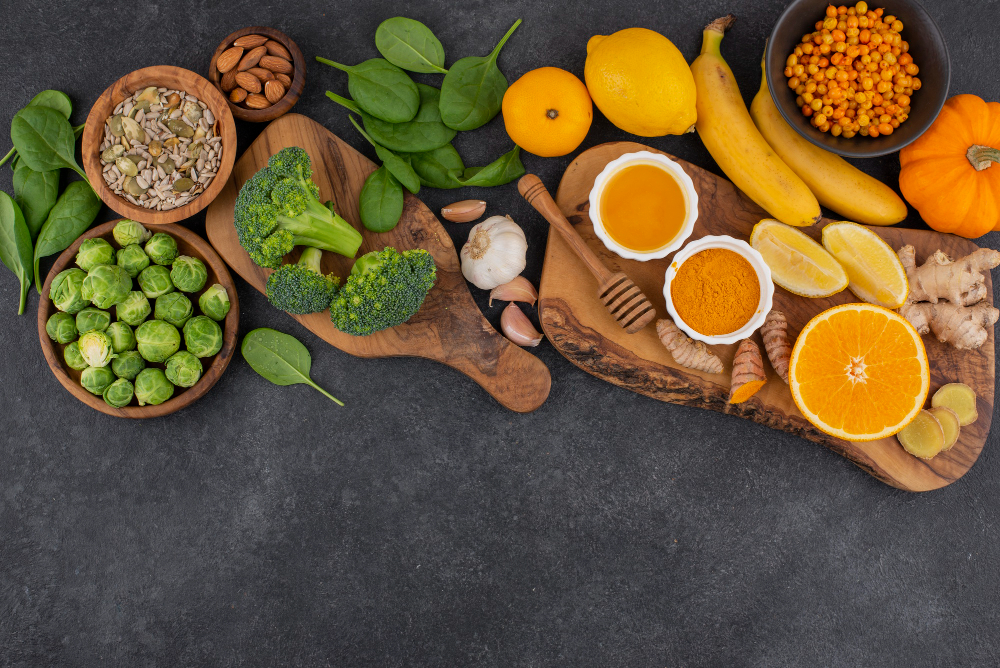
“The immune system relies on a constant supply of micronutrients to function, and certain plant foods are simply more potent than others,” asserts Dr. Evelyn Reed, a Registered Dietitian specializing in functional nutrition. “For example, berries and citrus fruits are stellar sources of Vitamin C, a powerful antioxidant that protects immune cells from damage and aids in the production of T-lymphocytes. Similarly, pumpkin seeds and cashews are excellent sources of Zinc, which is vital for the development and function of neutrophils and natural killer cells.”
Nutritional Deep Dive: Flavonoids and Inflammation
Many plant-based superfoods owe their status to high levels of flavonoids and other polyphenols (e.g., those found in green tea, grapes, and dark chocolate). These compounds act as potent anti-inflammatories. Chronic inflammation compromises the immune system; by dampening inflammation, superfoods like turmeric (curcumin) and garlic (allicin) allow the immune system to focus its resources on fighting actual pathogens.
Common Misconceptions vs. Reality:
- Misconception: Taking one mega-dose supplement is better than eating immune superfoods.
- Reality: Whole foods provide complex matrices of synergistic nutrients (e.g., Vitamin C, fiber, and various polyphenols). These work together far more effectively than isolated compounds found in most high-dose supplements.
LENS 2: Ethical Framework
The Ethical Advocate’s Stance: Sourcing Immunity with Integrity
For the ethical advocate, the consumption of global superfoods (like goji berries, chia, or turmeric) introduces a strong moral obligation to ensure sourcing practices are fair, transparent, and non-exploitative. The ethical commitment is to support health without compromising the well-being of global communities.
“When we talk about ‘superfoods,’ we must talk about the ‘super-ethics’ of how they reach our plates,” explains Maria Rodriguez, an ethical consumer advocate. “Many powerful immunity boosters are sourced from developing nations.
Choosing products with Fair Trade certification—for ingredients like ginger, turmeric, or cocoa—is essential. This guarantees that our personal health is not subsidized by labor exploitation or environmental destruction in the supply chain.”
Critical Reassessment: The Quinoa/Goji Effect
The ethical advocate encourages a critical reassessment of the high global demand for certain superfoods, which can sometimes drive up local prices, making traditional staples inaccessible to the communities that grow them. This demands that consumers prioritize products that support regenerative and equitable farming practices.
LENS 3: Environmental Impact
The Environmental Scientist’s Analysis: Biodiversity and Resilient Crops
The environmental perspective on immune-boosting superfoods focuses on their role in promoting agricultural biodiversity and supporting resilient farming systems. Many superfoods are traditional, nutrient-dense crops that thrive in harsh environments.
“The best immunity superfoods, like pulses and certain wild-harvested berries, often have a low environmental impact,” states Dr. Naomi Velez, an ecological impact specialist. “For example, pulses (beans, lentils) require minimal water and naturally fix nitrogen in the soil, reducing the need for synthetic, polluting fertilizers. Promoting these foods helps diversify monoculture farming and supports soil health—a win for the entire ecosystem.”
Market Transformation Maps: Local Superfoods
The market is transforming by shifting focus to local superfoods (e.g., wild blueberries, walnuts, or local herbal teas) that don’t incur high transport costs. This move reduces the carbon footprint associated with transporting tropical superfoods and strengthens regional food resilience.
Hidden Benefits: Traditional Agroforestry
Many potent superfoods (e.g., certain mushrooms, spices, cocoa) are traditionally grown within agroforestry systems which protect forests, promote biodiversity, and maintain natural ecological balances, offering significant hidden environmental benefits.
LENS 4: Practical Application
The Everyday Practitioner’s Experience: Integration and Consistency
For the everyday practitioner, the challenge is not knowing what superfoods to eat, but how to consistently integrate them into a busy daily routine. The practical application focuses on simplicity, accessibility, and high compliance.
“Immunity doesn’t come from a single hero food; it comes from daily consistency,” advises Sam Patel, a vegan lifestyle coach. “The easiest way to integrate superfoods is through simple ‘stacking’ methods: adding chia and flax to oatmeal, blending spinach into a smoothie, or incorporating turmeric into a daily curry. The recipes must be simple, no-fuss, and blendable into existing habits.”
Daily Impact: The Morning Immunity Ritual
The practitioner’s plan centers on a morning ritual to frontload immune nutrients: a smoothie containing a source of Vitamin C (berries/citrus), Zinc/Selenium (seeds/hemp), and an anti-inflammatory (ginger/turmeric). This strategy ensures high-impact nutrients are consumed daily, regardless of subsequent meal complexity.
Alternative Approaches: Fermented Foods
A critical practical application is including fermented superfoods (e.g., sauerkraut, kimchi) in the diet. These provide powerful probiotics that support gut health, which is directly linked to immune function, offering a simple, dual-action immune boost.
LENS 5: Cultural Significance
The Cultural Observer’s Perspective: Shifting to Preventative Health
The cultural significance of the plant-based superfood movement lies in its massive contribution to the cultural shift toward proactive and preventative health. It moves the focus away from simply treating illness to investing in robust, long-term well-being.
“The superfood trend is essentially the cultural embrace of traditional plant wisdom backed by modern science,” observes Dr. Sarah Johnson, a sociologist of public health. “Ingredients like turmeric and ginger, which have been used for centuries in Ayurveda and Traditional Chinese Medicine, are now being popularized in Western diets. This marks a cultural milestone: the global recognition of non-pharmaceutical, preventative food as medicine.”
Turning Point Analysis: The Wellness Industry and Accessibility
A key cultural turning point was the mainstreaming of these foods via the wellness industry and high-profile research. Once seen as exotic, superfoods are now stocked globally, making preventative nutrition accessible and culturally desirable.
Voice of Experience: Feeling Empowered
“I feel much more empowered knowing I can actively support my body’s defenses through my daily food choices,” shares wellness advocate Alex Miller. “It changes the whole relationship I have with my health—it’s proactive, not reactive.”
PERSPECTIVE INTERSECTION MATRIX
- Nutrition (LENS 1) cap Practical Application (LENS 4): The scientific need for Vitamin C and Zinc synergy (LENS 1) is met by simple, batch-prepared smoothie recipes (LENS 4) that ensure consistent daily intake.
- Ethics (LENS 2) cap Environmental Impact (LENS 3): The ethical demand for fair sourcing (LENS 2) often directs consumers to support environmentally beneficial agroforestry systems (LENS 3) that produce high-quality spices and herbs.
- Cultural Significance (LENS 5) cap Nutritional Analysis (LENS 1): The cultural recognition of traditional plant wisdom (LENS 5) is validated by modern science’s understanding of the potent antioxidant and anti-inflammatory roles of those same superfoods (LENS 1).
- Synthesis: The strategic inclusion of plant-based superfoods for immunity creates a powerful synergy that links personal health optimization with global ethical responsibility, driving a resilient and informed food culture.
MISCONCEPTION ANALYSIS
| Misconception | Reality |
| “Superfoods are exotic and expensive.” | Many potent immune superfoods are common, inexpensive staples: garlic, onions, ginger, citrus, beans, and lentils. |
| “Immunity is built by a single superfood or supplement.” | Immune strength is built by consistent, synergistic intake of multiple nutrients (Zinc, C, A, D, etc.). No single food provides complete coverage. |
| “Superfoods are a cure for illness.” | Superfoods strengthen the immune system’s ability to defend and recover, but they are not a substitute for medical treatment or essential hygiene practices (like hand washing). |
| “More is always better with immune nutrients.” | Excessive intake of certain nutrients (like Zinc or Vitamin A) from supplements can be toxic. Whole foods and RD guidance ensure safe, effective levels. |
KEY TURNING POINTS
- The Gut-Immunity Connection (Early 2000s): Research confirming the gut’s role in immune health amplified the importance of superfoods rich in fiber and probiotics (fermented foods).
- Increased Global Sourcing (2010s): The integration of ingredients like turmeric, moringa, and ginger into Western culinary practices led to wider commercial availability.
- Pandemic-Driven Health Awareness (Present): The global focus on preventative health during the pandemic accelerated the cultural imperative to consume immune-boosting foods.
SYNTHESIS & RECOMMENDATIONS
Prioritizing plant-based superfoods is the most effective, ethical, and sustainable way to build a robust immune system. It represents a powerful choice for proactive self-care.
Convergent Reflections: The scientifically proven need for specific nutrients (Nutrition) is met by resilient, low-impact crops (Environment) sourced with integrity (Ethics). These are then strategically integrated into daily life (Practical) to support a cultural value of wellness (Cultural).
Recommendations:
- Prioritize Synergy: Combine Zinc-rich foods (seeds, nuts) with Vitamin C-rich foods (berries, citrus) in the same meal to maximize mineral absorption.
- Use Spices Daily: Integrate high-impact spices (turmeric, ginger, cinnamon) into daily cooking (oatmeal, curries, smoothies) for consistent anti-inflammatory benefits.
- Source Ethically: Seek out Fair Trade and ethically sourced certifications for globally sourced superfoods to ensure your health choices support a fair system.
- Embrace Fermentation: Consistently include fermented foods (sauerkraut, kimchi, vegan yogurt) to support gut health, a key foundation of immunity.
FURTHER AREAS OF EXPLORATION
- The role of Vitamin D (and necessary supplementation) in a plant-based immune strategy.
- Detailed analysis of the specific phytochemicals in cruciferous vegetables that support detoxification pathways.
- The impact of stress management techniques (like meditation) on immune function, complementing diet.
- A guide to growing local superfoods (e.g., garlic, kale, ginger) in home gardens.