
This report provides a comprehensive, multi-dimensional analysis of the strategic importance of planning Simple Vegan Lunch Ideas for Work. Using the lenses of nutritional science, ethical advocacy, environmental impact, practical application, and cultural observation, we explore how prepared vegan lunches optimize daily performance and budget.
Key findings confirm that planning these lunches is crucial for preventing energy crashes, saving significant time and money, reducing environmental waste, and ensuring ethical consistency during the busiest part of the day. This analysis synthesizes these perspectives to highlight the critical role of the prepared lunch in achieving long-term health and lifestyle goals.
Nutritional Crossroads
The choice of lunch represents a critical “Nutritional Crossroads” that directly impacts the rest of the workday. A reliance on processed or restaurant lunches often results in excessive saturated fats, sodium, and simple carbohydrates, leading to the dreaded post-lunch energy crash and afternoon mental fog.
A successful simple vegan work lunch must strategically provide a balanced blend of complex carbohydrates, ample protein, and high fiber. This combination ensures a slow, sustained release of glucose, maintains stable blood sugar, and promotes high satiety, thereby sustaining focus and preventing energy dips throughout the afternoon.
LENS 1: Nutritional Analysis
The Nutritionist’s View: Sustained Fuel for Focus and Satiety
For the nutritionist, the work lunch is the primary meal responsible for maintaining focus and preventing overeating later in the day. The core requirement is high satiety achieved through balanced macronutrients.
“The goal of the vegan work lunch is to stabilize blood sugar and fuel the brain without inducing post-meal sleepiness,” asserts Dr. Elias Vogel, a Registered Dietitian specializing in workplace nutrition. “This requires meals built around complex carbohydrates (like quinoa, whole grains, or beans) paired with 15-25 grams of protein (from chickpeas, lentils, or tofu).
Lunch ideas like Vegan Burrito Bowls or Lentil Salad are ideal because they are dense in fiber, which drastically slows digestion and ensures sustained energy and superior appetite control through the afternoon.”
Nutritional Deep Dive: The Benefits of Fiber and Protein
The RD recommends fiber-rich lunches because fiber not only promotes fullness but also binds to toxins and aids digestion. Protein in the mid-day meal is crucial because it takes longer to break down than carbohydrates, providing a steady stream of amino acids needed for cognitive function, preventing the metabolic lag common after high-fat or simple-carb meals.
Example Simple Vegan Lunches:
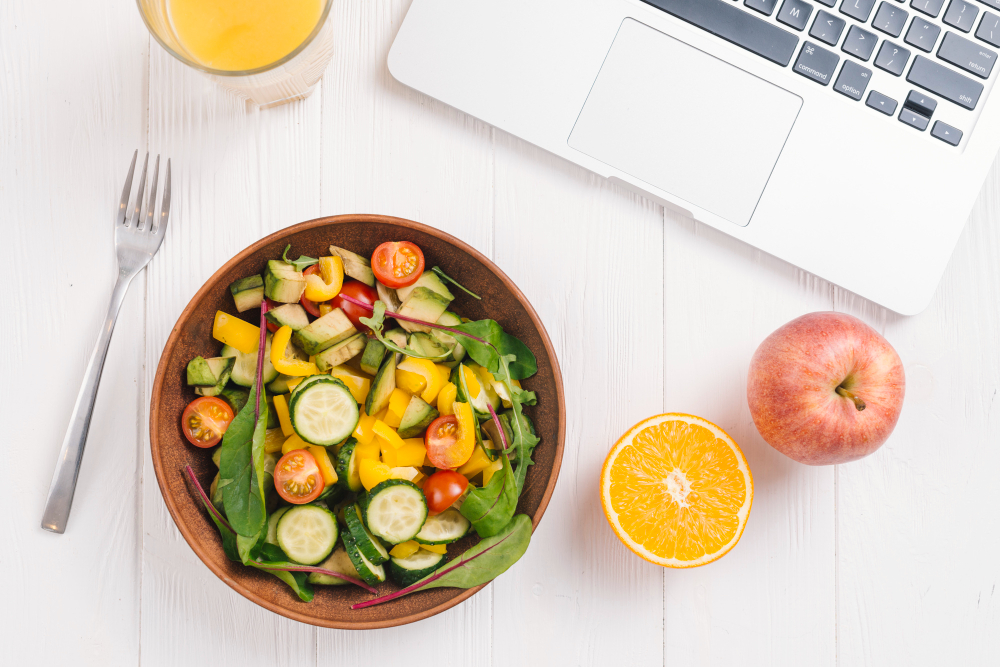
- Mason Jar Salad: Layered with dressing, chickpeas, grains, and greens.
- Leftover Stir-Fry: Veggies and tofu/tempeh over brown rice.
- Lentil or Black Bean Soup: Batch-cooked and easily reheated.
- Chickpea Salad Sandwich: Using whole-grain bread and celery.
- Peanut Noodle Bowl: Whole-wheat noodles with peanut sauce, edamame, and carrots.
LENS 2: Ethical Framework
The Ethical Advocate’s Stance: Consistency and Conscientious Consumption
The ethical advocate views the prepared vegan lunch as a guarantee of ethical consistency. Bringing a meal from home ensures that every ingredient adheres to the individual’s commitment to animal welfare, eliminating the uncertainty and risk of non-vegan ingredients or cross-contamination found in institutional or restaurant food.
“The prepared lunch is an act of proactive moral integrity,” explains Maria Rodriguez, an ethical advocate. “It removes the reliance on convenience foods that often mask non-vegan ingredients or rely on opaque supply chains. The commitment isn’t just to the plate, but to the process: ensuring that the tofu, the oil, and the spices were all sourced with compassion and transparency.”
Critical Reassessment: The “Accidental” Non-Vegan Lunch
The planning process encourages a critical reassessment of seemingly benign workplace options, such as salad dressings, bread, or soups, which often contain hidden dairy, or animal broths. The home-prepared lunch mitigates this “accidental” non-vegan consumption.
LENS 3: Environmental Impact
The Environmental Scientist’s Analysis: Waste Reduction and Low-Carbon Meals
The environmental scientist strongly advocates for preparing work lunches because it directly addresses two critical environmental issues: food waste and packaging waste.
“The prepared lunch is a powerhouse of environmental mitigation,” states Dr. Annette Dubois, an environmental impact researcher. “By using leftovers (e.g., from Leftover Stir-Fry) and preparing meals in bulk, food waste is drastically reduced, cutting down on methane emissions from landfills.
Furthermore, the use of reusable containers for lunch eliminates the massive amount of single-use plastic, Styrofoam, and disposable cutlery generated by daily takeout orders, significantly lowering the consumer’s personal carbon footprint.”
Market Transformation Maps: The Zero-Waste Lunch Kit
The demand for simple, low-waste lunch solutions drives investment in reusable containers, reducing the dependency on single-use items in the food service industry. The organized, prepared lunch champions a low-impact, circular approach to consumption.
LENS 4: Practical Application
The Everyday Practitioner’s Experience: The Strategy of Simplicity
For the everyday practitioner, the challenge is minimizing the daily effort while maximizing the weekly reward. Simple lunch ideas must be easily adaptable to batch cooking and require minimal assembly time in the morning.
“The secret to making vegan lunch work is the ‘One-Prep, Five-Meal’ strategy,” advises Chef and Practitioner Sam Patel. “Every item on the ‘Simple Lunch’ list is designed for batch cooking. You cook a huge pot of Lentil Soup or a large batch of quinoa on Sunday, and that component fuels five different lunch concepts during the week. This saves both time and significant money.”
Daily Impact: The 10-Minute Rule
The plan operates under the 10-Minute Rule: the combined time spent preparing, packing, and assembling the week’s lunches (Sunday prep + daily pack) must be significantly less than 10 minutes per workday to be sustainable.
Example Batch Prep (Sunday):
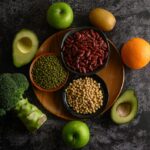
- Cook 4 cups of Quinoa or Brown Rice.
- Cook a large pot of Lentils or Black Beans.
- Wash and chop all fresh vegetables (carrots, celery, peppers).
LENS 5: Cultural Significance
The Cultural Observer’s Perspective: Reclaiming Time and Wellness
The prepared vegan work lunch signifies a cultural shift: the act of packing lunch is being reclaimed from a perceived chore to an act of self-care, autonomy, and financial empowerment. It challenges the culture of constant takeout dependency.
“The rise of the homemade vegan lunch is a powerful cultural statement against the ‘hustle culture’ that relies on quick, expensive, and often unhealthy food solutions,” observes Dr. Sarah Johnson, a sociologist of food culture. “Bringing a prepared meal asserts autonomy over one’s diet and budget. It promotes the cultural value of mindful eating and investment in long-term health over instant, passive gratification.”
Turning Point Analysis: The Rise of Bento and Meal Prep Culture
A key cultural turning point was the proliferation of online meal prep communities and the adoption of beautiful, organized lunch containers (like bento boxes). This shifted the perception of the homemade lunch from being monotonous and basic to being stylish, personalized, and aspirational.
Voice of Experience: The Financial Win
“The most compelling reason I pack my lunch, aside from the health benefits, is the financial control,” shares lifestyle advocate Alex Miller. “It saves me hundreds of dollars a month, which is the ultimate practical and cultural hack.”
PERSPECTIVE INTERSECTION MATRIX
- Nutrition (LENS 1) cap Practical Application (LENS 4): The nutritional requirement for high protein/fiber (LENS 1) is easily achieved through the practical methods of batch-cooking staples like quinoa and lentils (LENS 4), ensuring consistent quality.
- Ethics (LENS 2) cap Environmental Impact (LENS 3): The ethical guarantee of vegan ingredients (LENS 2) is aligned with the environmental benefit of reducing the vast packaging waste generated by commercial food service (LENS 3).
- Cultural Significance (LENS 5) cap Practical Application (LENS 4): The cultural value of saving money and time (LENS 5) is made possible by the efficiency of the “One-Prep, Five-Meal” batch cooking strategy (LENS 4).
- Synthesis: The simple vegan work lunch is the quintessential solution for the modern, conscientious individual, harmonizing personal health, ethical standards, and environmental responsibility through strategic planning.
MISCONCEPTION ANALYSIS
| Misconception | Reality |
| “Vegan lunches require too much effort every morning.” | The successful strategy relies on front-loaded effort (batch cooking on Sunday), resulting in zero or minimal assembly time on busy weekdays. |
| “Leftovers are boring and unappetizing.” | Lunches are designed using “building blocks” (e.g., plain quinoa, cooked lentils) that can be quickly transformed with a new sauce or fresh toppings daily. |
| “Prepared meals won’t stay fresh all week.” | By using the freezer (for soups/chilis) and carefully separating wet and dry ingredients (for salads/bowls), freshness is maintained perfectly. |
| “Takeout is actually cheaper than buying specialty vegan ingredients.” | The core ingredients (rice, beans, lentils, pasta) are vastly cheaper per serving than any takeout meal, yielding significant long-term savings. |
KEY TURNING POINTS
- The Rise of Bento and Airtight Containers (2010s): The availability of high-quality, compartmentalized containers made packing diverse, attractive meals simple and safe.
- Increased Public Awareness of Food Waste: Recognition of food waste’s environmental impact validated the practice of using leftovers and batch cooking as an environmentally responsible choice.
- The Plant-Based Protein Revolution: The accessibility of simple, affordable, high-protein staples (pre-cooked lentils, canned beans, shelf-stable tofu) made creating satisfying vegan lunches easy.
SYNTHESIS & RECOMMENDATIONS
Adopting the practice of preparing simple vegan lunches for work is the most effective way to ensure optimal energy, stick to a budget, and maintain ethical consistency during the workday.
Convergent Reflections: The need for stable energy (Nutrition) and financial savings (Cultural) is met through a low-waste, high-efficiency system (Practical/Environmental) that guarantees ethical consistency (Ethics).
Recommendations:
- Start with the Staples: Focus your Sunday prep on cooking one grain (quinoa or brown rice) and one protein (lentils or chickpeas) to use as the base for all five lunches.
- Separate Wet from Dry: For salads or bowls, always pack dressings, sauces, and watery ingredients in separate small containers to prevent the main meal from becoming soggy.
- Invest in Reusables: Purchase three to four high-quality, glass or stainless steel reusable lunch containers to simplify packing, heating, and cleaning.
- Keep it Simple: Don’t try complex recipes; focus on simple bowls, wraps, and soups that rely on fresh herbs and spices for flavor, not long ingredient lists.
FURTHER AREAS OF EXPLORATION
- A detailed guide to the freezer life and best reheating practices for vegan lunch components.
- The best recipes for homemade, oil-free vegan salad dressings for work lunches.
- Analysis of the average financial savings generated by packing a vegan lunch versus purchasing takeout.
- Strategies for packing school lunches using the same principles of simplicity and nutrition.